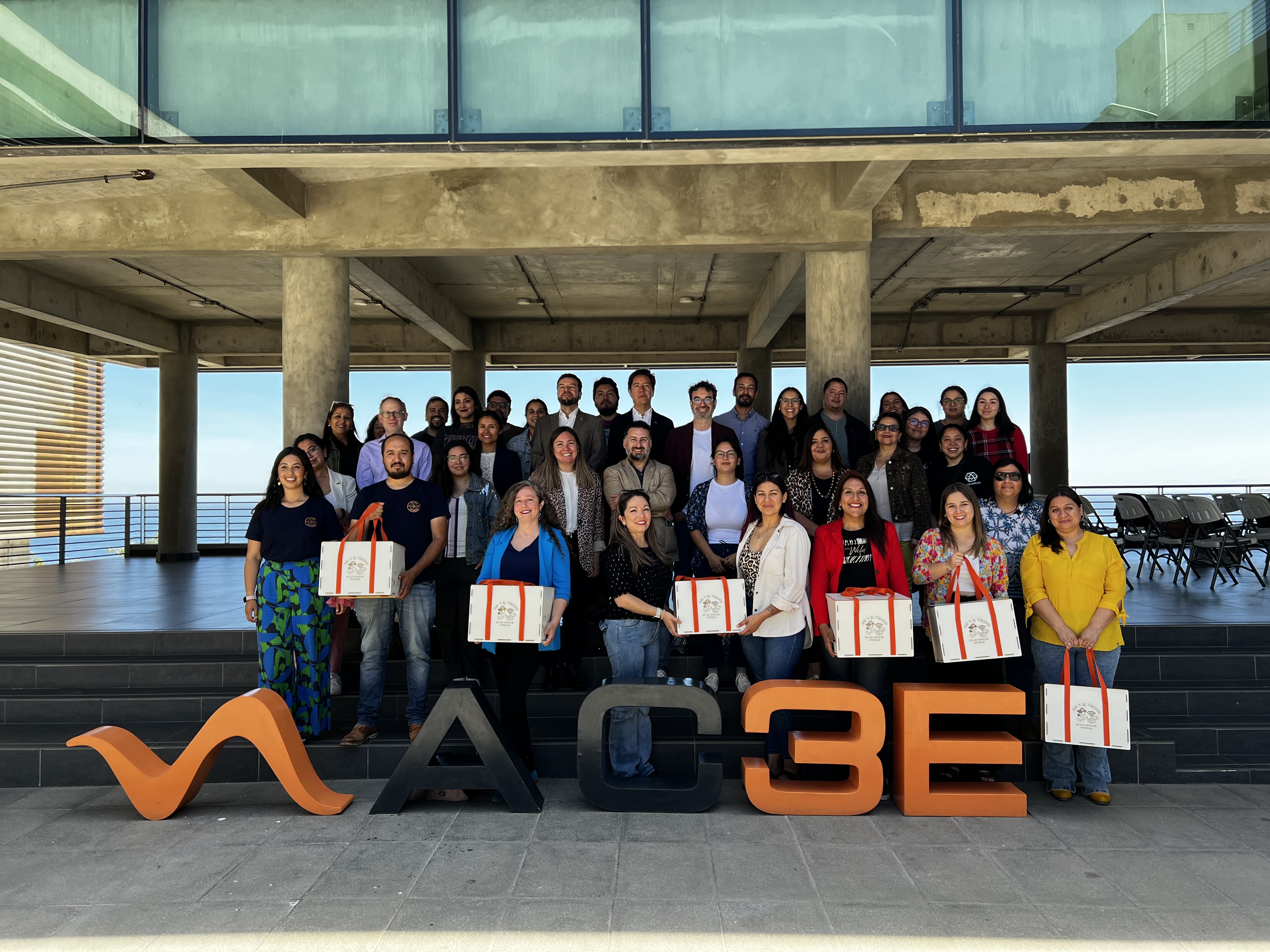

The Federico Santa María Technical University (USM) received the AIE Chilean Technology Award, in the category of Centers and Educational Institutions, for the development of Punto EV, a solar-powered electric vehicle charging station developed through the Advanced Center for Electrical and Electronic Engineering (AC3E) located on the Valparaíso Central Campus.
The award was presented during the Annual Meeting of the Association of the Electrical and Electronic Industry (AIE) and recognizes initiatives linked to technological innovation and sustainability.
Punto EV is the first solar charging station for electric vehicles implemented at a Latin American university. The infrastructure includes 32 photovoltaic solar panels, allows the simultaneous charging of up to six electric vehicles, and operates using renewable energy.
The station functions as a living laboratory, designed for academic activities and projects related to renewable energy, electromobility, and charging systems, within a 140 m² space that enables work under real operating conditions.
This initiative represents the first node of an infrastructure network that USM plans to extend to the San Joaquín Campus, Vitacura Campus, Viña del Mar Campus, and Concepción Campus, as part of the development of electromobility-related infrastructure.
The award was received by María José Escobar, USM’s Director General of Community Engagement, and Javier Robledo, Business Developer at AC3E, representing the work carried out by the university.
In this context, Javier Robledo stated that this recognition:
“confirms that we are moving in the right direction: advancing toward electromobility that not only changes the engine, but also the way we charge, leveraging renewable energy to reduce emissions and ease the demand on the electrical grid.”
The project was developed with the support of Arauco, Rhona, Dhemax, Nissan, Gildemeister, and E-Auto Global. Since its launch, Punto EV has helped prevent the emission of nearly two tons of CO₂ per month, has surpassed 1 MWh of accumulated charging, and records a daily energy generation of close to 80 kWh.