Following President Gabriel Boric’s visit to the European Organization for Nuclear Research (CERN) in July of last year, Chile’s application for incorporation as an associate member of the scientific institution was officially initiated. Eight months later, a delegation from the laboratory traveled to our country to evaluate the capabilities in science, technology transfer, and innovation that it has.
The committee is composed of Charlotte Lindberg, CERN’s Director of International Relations; Joachim Mnich, Director of Research and Computing; Inmaculada Figueroa, Managing Director for the Kingdom of Spain; and Salvatore Mele, Senior Advisor for International Relations. The advisor for international relations of the Ministry of Science, Gonzalo Arenas, says he is “sure that we have made a good impression, because although CERN has been working with Chile for years and national scientists have already demonstrated their capabilities, there are things they did not expect to find so consolidated.”
The European institution, based in Geneva, Switzerland, is today the most important particle physics laboratory in the world and one of the most influential research centers globally. It houses the Large Hadron Collider (LHC), which with 27 km in length and located 100 meters below the Franco-Swiss border, is the largest machine created in the history of humanity.
“Each country must know how to make the most of its association with CERN,” adds Arenas, indicating some of the benefits that our country could access if it manages to become a Member State. “Chilean companies will be able to apply for and win bids from the laboratory, which each year borders 600-700 million dollars. In addition, Chileans will be able to be hired by CERN and, finally, it opens access to opportunities in technology transfer from an organization that has been developing cutting-edge technology for 70 years. So these possibilities, in case of being an associated country, will become open to Chile,” he says.
Meeting with USM
After visiting the Pontifical Catholic University of Chile, the Andrés Bello University, as well as trade associations and State entities, the representatives of the European organization moved to Valparaíso to learn about the centers, capabilities and dependencies of the Federico Santa María Technical University, with which CERN has established scientific collaborations for more than a decade.
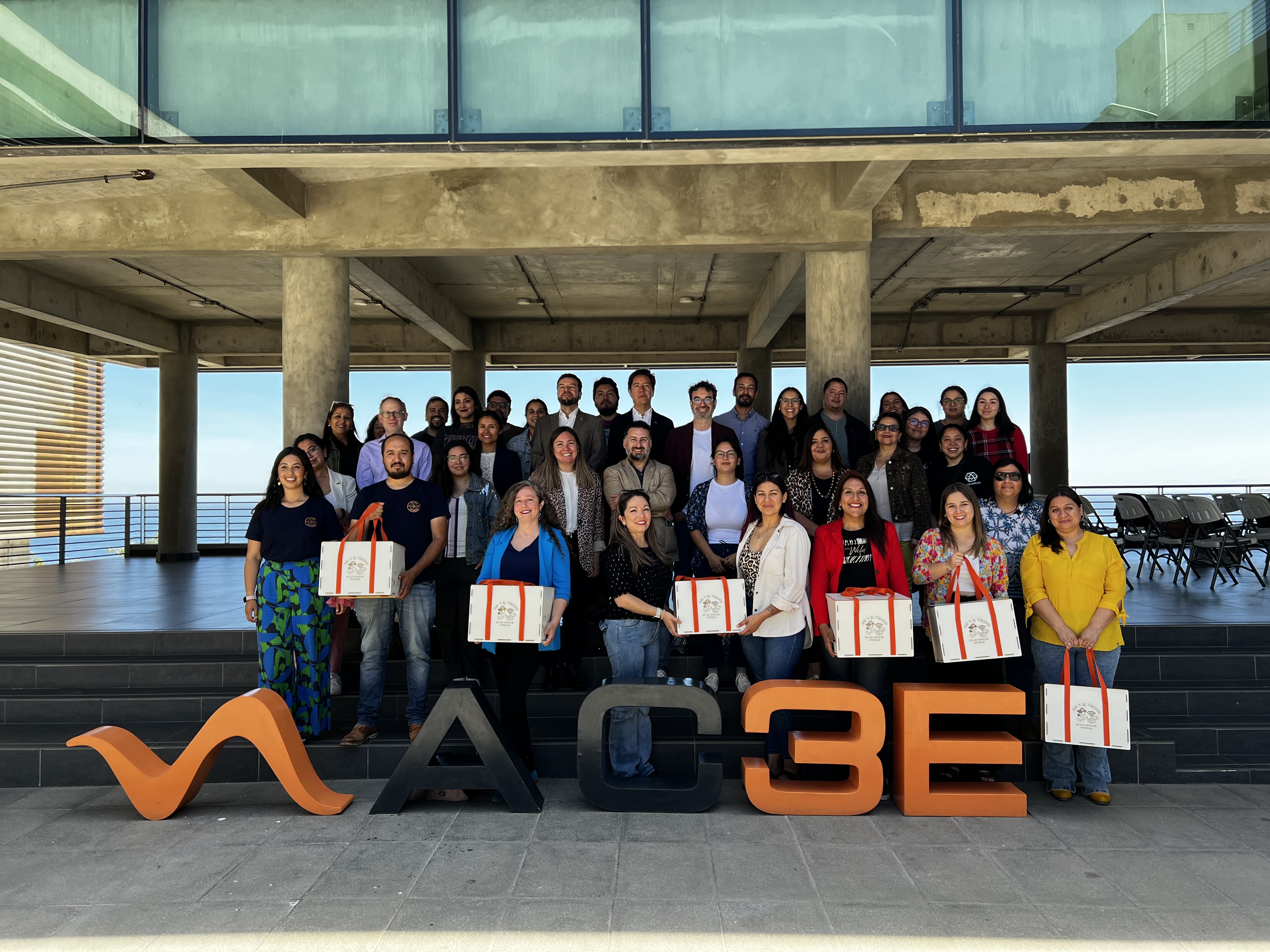
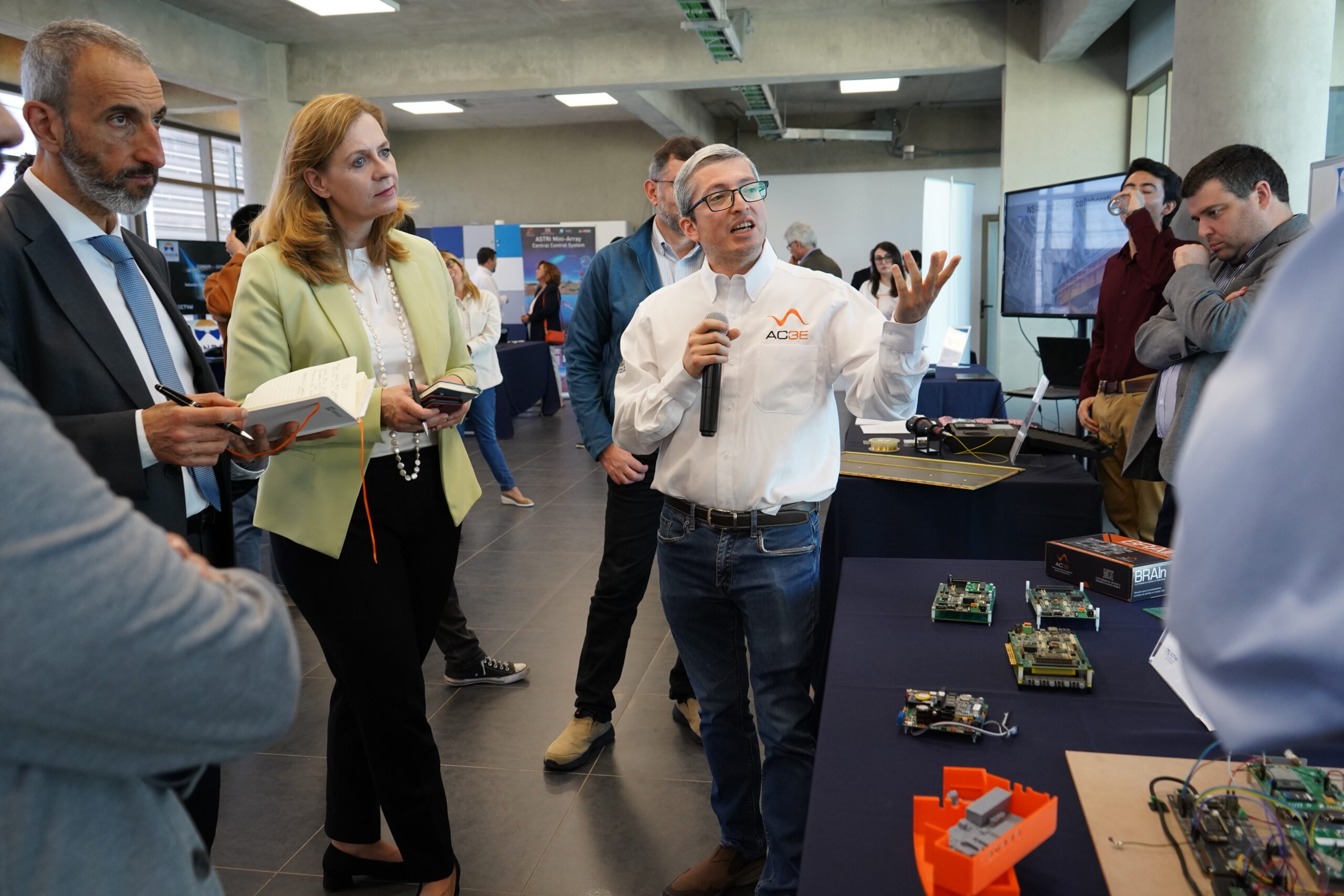
During the visit, the committee went to the USM Technological Innovation Building, where they were able to review part of the projects and initiatives of the Valparaíso Scientific Technological Center (CCTVal) and the Advanced Center for Electrical Electronic Engineering (AC3E), both belonging to the house of studies.
“As an institution, it is very relevant to receive the CERN committee, one of the most outstanding scientific research centers worldwide, to contribute to Chile becoming a member country. This meeting provides us with the opportunity to share our scientific and technological capabilities, as well as the cutting-edge projects that our researchers develop, in addition to demonstrating our firm commitment to the progress of the country,” said the rector of the USM, Juan Yuz, at the meeting.
To date, CCTVal has been one of the institutions that has collaborated closely with CERN, mainly from the development of 33 subatomic particle detector modules that are now in operation in ATLAS, one of the LHC experiments. The center also maintains a scientific collaboration with CMS, another of CERN’s collaborations.
“If Chile’s incorporation is approved, scientific-technological development in the country will be greatly enhanced. In the particular case of our center, we will be able to continue strengthening the work of excellence that we have been doing since 2009 in research and technological innovation in particle physics,” says the director of CCTVal, William Brooks.
With the eventual association of Chile, AC3E also projects a joint work with the European laboratory. Its capabilities in electrical and electronic engineering, according to its director, Matías Zañartu, open various opportunities to strengthen the alliance with the institution.
“It is a pride to have the visit of a center like CERN, whose research work in fundamental physics has high global recognition. As AC3E, our commitment is to develop high-complexity electronics, microelectronics, programming of FPGA devices and embedded systems to support this laboratory in the search for solutions to device control problems for physics,” he highlighted