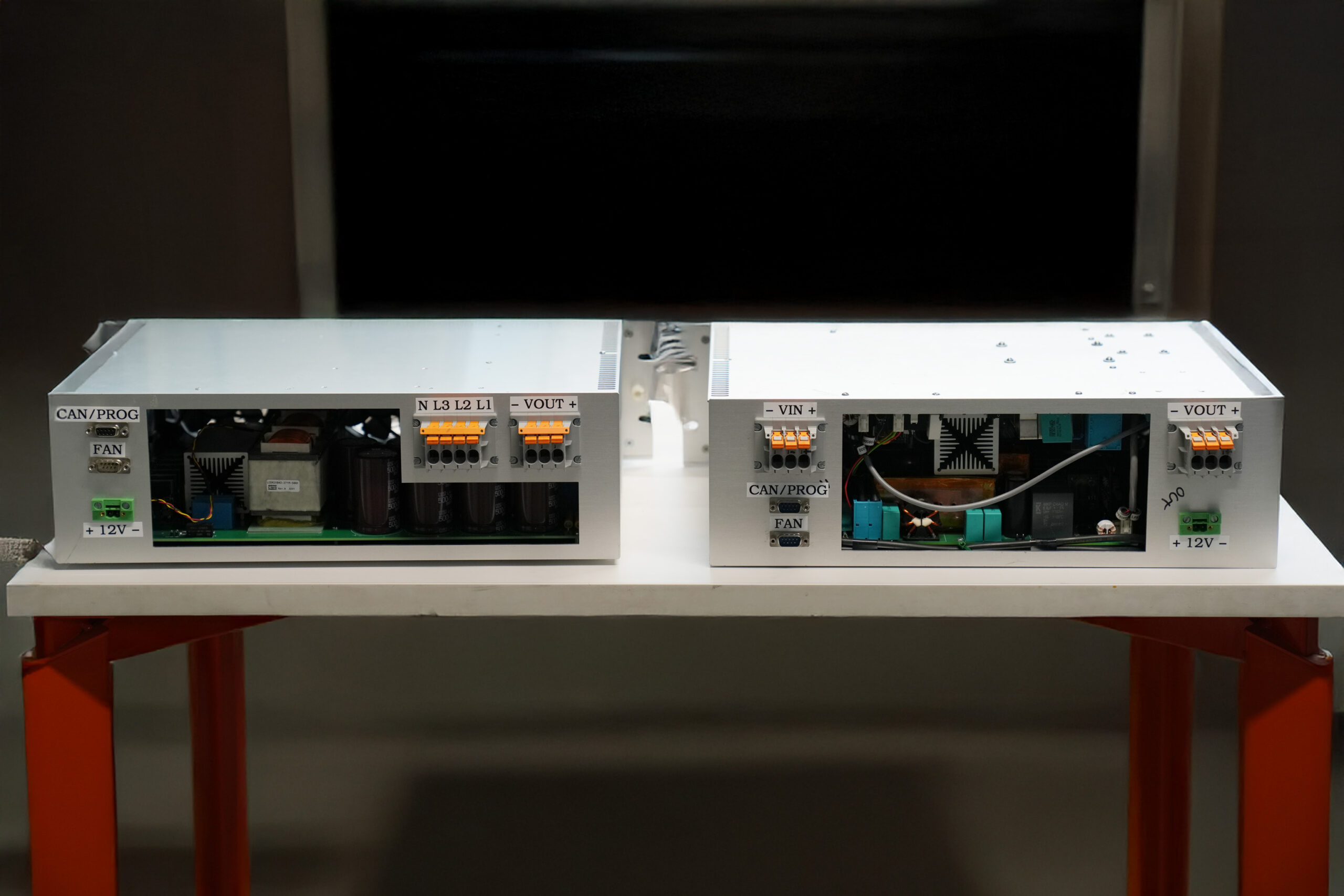
Technology based on power converters, developed by researchers at the Advanced Center for Electrical and Electronic Engineering (AC3E) and licensed to Dhemax, a leading Chilean company in e-mobility solutions, recently received a patent from the United States Patent and Trademark Office.
This marks a significant milestone in the industry-academia relationship and highlights the importance of both sectors working collaboratively to address global challenges, such as the need to promote the use of renewable energy for sustainable development.
In 2014, after securing a Fondecyt project, our researchers began working on the development of partial power converters. This technology was refined over time, leading to several publications in prominent scientific journals and conferences.
“This technological development originated from research and later caught the attention of the Dhemax company for developing fast-charging stations for large fleets of electric vehicles. This way, what started as a research area at the Center was transformed into a technology that can be used by the industry,” said AC3E researcher Dr. Samir Kouro.
The results of this technology have been successful, achieving an efficiency of over 98.5% when charging the company’s own electric vans, which demonstrates how the work of research centers, like AC3E, positively impacts the national productive sector.
“Milestones like the awarding of this patent show the importance of collaboration between companies and academia to stand out as a country, not only for the copper we have but for the value of what we produce,” said Andrés Barentin, CEO and founder of Dhemax.
For the engineer in charge of this national company, this technology, developed in conjunction with AC3E, is an enabler for what they hope will be the future of electric vehicle charging infrastructure. It allows for the management and administration of energy, avoiding the payment of energy taxes each time a conversion is made.
“This is Dhemax’s first patent and it underscores the company’s commitment to research, development, and innovation in the market we’re in. We also hope it won’t be the last,” Barentin noted, also highlighting the positive experience of working with the Center.
“Chilean companies need to innovate technologically to compete in the global market, which is why it is fundamental to establish collaborative relationships between the productive sector and academia. In this case, the patent, awarded for a technological development that originated at the Center, will allow the company to scale it up to an industrial level to commercialize it not only in Chile but worldwide,” the researcher concluded.